Research·note·Sep 2026·6 min read
AI can write code faster. That does not make building software instant.
Applied AIEngineeringWork
A few notes after Tech Passion Day 2026 in Copenhagen.
This week I had the chance to attend Tech Passion Day 2026 in Copenhagen, an event focused on technology, software, cloud, architecture, and artificial intelligence.
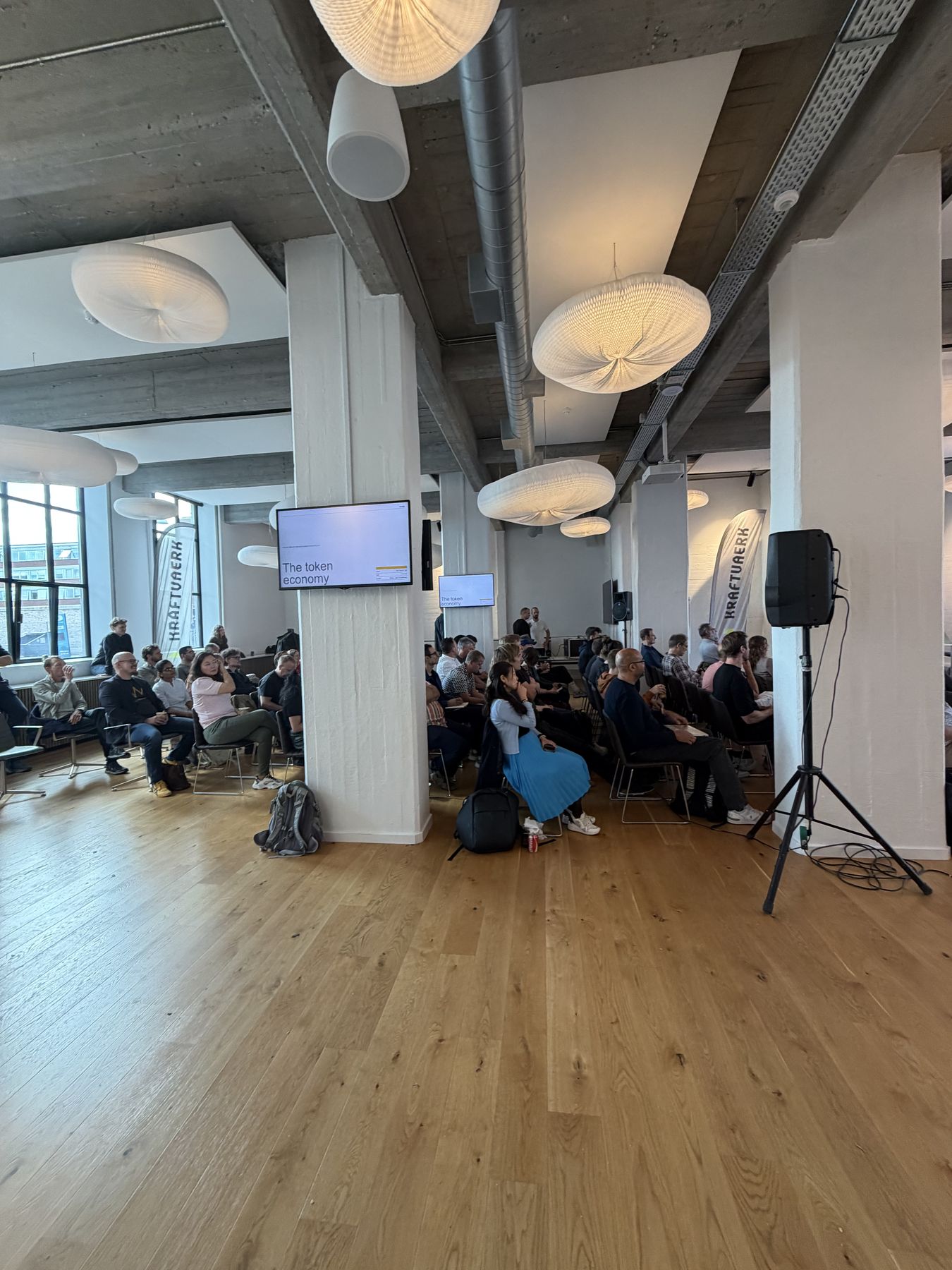
There were plenty of interesting conversations throughout the day. One of the first talks, titled “AI took my job, thankfully,” left an idea that, for me, sums up the moment we are in:
AI raised the ceiling on what you can attempt. It did not lower the floor on what you have to understand.
Artificial intelligence has massively raised what we are able to attempt.
Today one person or a small team can build products, automations, and systems that a few years ago would have needed more developers, more time, and a much larger budget.
That is incredible.
But there is a part of this revolution that sometimes drops out of the conversation:
the fact that something can be built faster does not mean that understanding what we are building matters less.
It is probably the opposite.
AI speeds up “Generate”, not the whole process
One of the slides from the talk laid out AI-assisted development in a simple line:
Intent → Constraints → Generate → Verify → Integrate → Observe
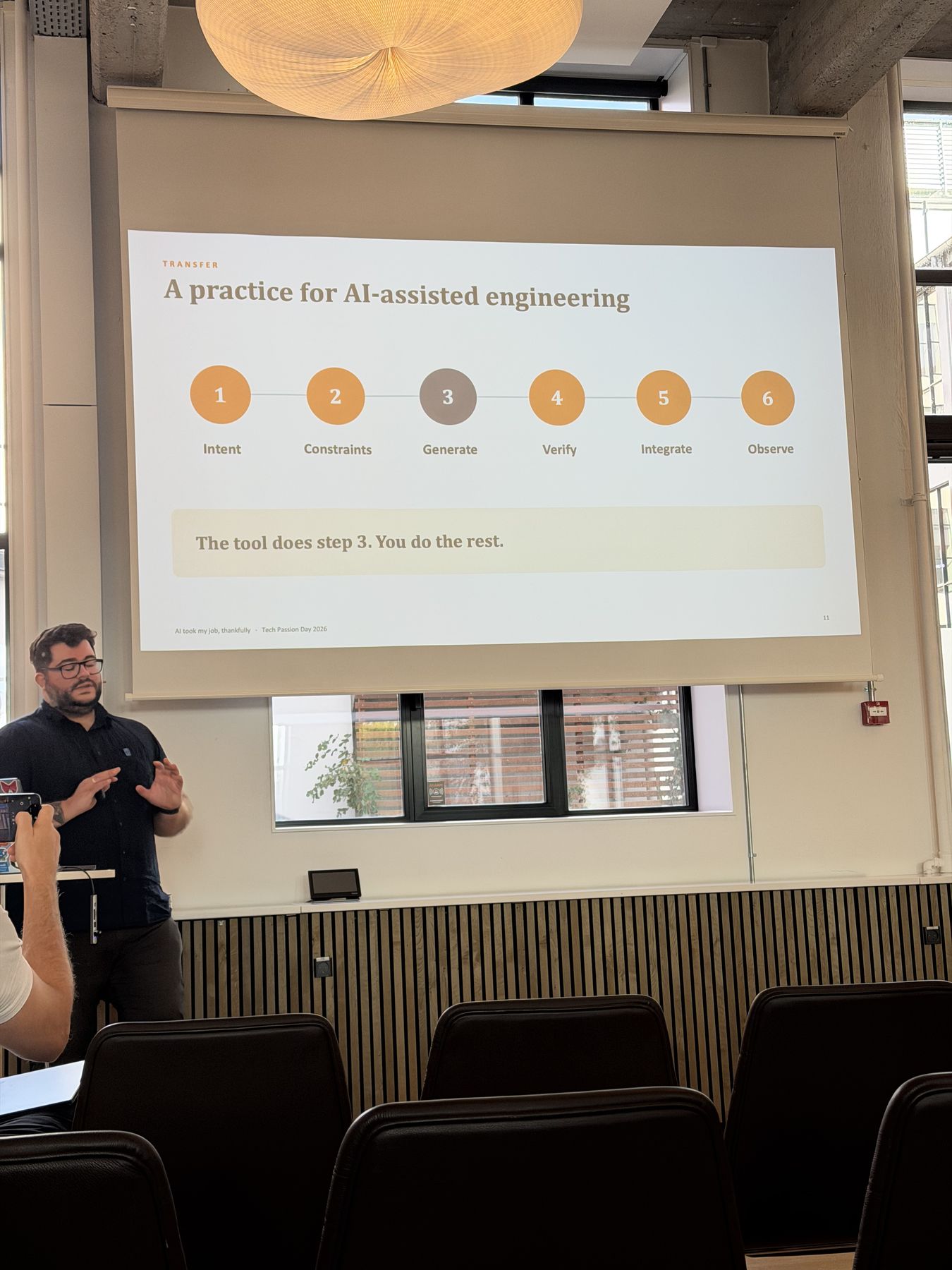
Watching it, I thought it explains something we see constantly when we work with technology.
First comes Intent.
What do you actually want to achieve?
Not which screen you want.
Not which feature you saw on another platform.
Not what you asked ChatGPT to program.
What business problem are we trying to solve?
Then come the Constraints.
Budget, timelines, users, infrastructure, security, existing systems, permissions, business rules, scalability, and a long list of other variables that completely change the solution.
And then, yes, comes Generate.
This is where AI is changing our industry brutally.
Today we can generate code, structures, documentation, interfaces, tests, and first-pass solutions much faster than before.
But the process does not end there.
Then you have to Verify.
Does what was generated actually work?
Does it do what it should?
Does it have bugs?
Is it secure?
Are we understanding the code, or just trusting that because AI wrote it, it must be fine?
Then you have to Integrate.
A system rarely lives alone.
There are databases, APIs, CRMs, ERPs, external tools, users, permissions, servers, internal processes, and systems that have often been running for years.
And finally you have to Observe.
Because it is one thing for something to work on a computer during a test.
It is something else entirely to watch how it behaves when real people start using it.
“If AI already exists, why does this still take weeks?”
This is probably one of the more interesting conversations in the industry right now.
Artificial intelligence has created a completely reasonable expectation:
if we can generate code much faster, then building software should be faster.
And that is true.
It is.
But from there another, much more dangerous expectation is also taking shape:
that now everything should be built practically overnight.
If something used to take three months, why shouldn’t it take three days?
If AI writes code, why does building a system still cost money?
The answer is relatively simple:
because generating code was never the whole job.
Code is one part of the process.
Understanding what the business actually needs is also work.
Designing the solution properly is work.
Thinking through architecture is work.
Defining how it will connect to other systems is work.
Validating edge cases is work.
Reviewing security is work.
Testing is work.
Fixing is work.
Watching what happens after launch is work.
And above all, making good technology decisions is still work.
AI can speed up many of those activities.
It does not remove the need to do them well.
The problem shows up later
One of the dangerous things about building software too fast is that the problem usually does not show up on day one.
You can generate an application.
It can open.
The buttons work.
The interface looks fine.
The demo lands perfectly.
And that can create the feeling that the product is finished.
But the problems arrive when the users do.
When traffic grows.
When a business rule changes.
When another platform changes its API.
When someone enters unexpected information.
When a security issue appears.
When you need to change something six months later and nobody understands why it was built that way.
That is when you start paying the debt of every decision that was not made properly at the start.
That is why a line that sums up how we see it at Inteligart is:
we want to use AI to go faster, but we never confuse going faster with rushing.
Those are two completely different things.
The real advantage of AI is not deleting judgment
The competitive advantage of the next few years will probably not be simply knowing how to use AI tools.
They will keep getting easier to use.
The difference will be who builds enough judgment to use them well.
Knowing what to ask.
Knowing what to challenge.
Knowing what to review.
Knowing when something that apparently works is in fact badly built.
And knowing when the best decision may even be not to use AI.
The tools change very fast.
The models change.
The frameworks change.
The platforms change.
But understanding systems, users, the business, security, data, and architecture is still knowledge that lasts.
Another line from the talk put it perfectly:
Durable knowledge outlives your tools.
Getting out of your own bubble
And probably one of the things I enjoy most about going to events like this outside Mexico is hearing how different people are reading the same technological shift.
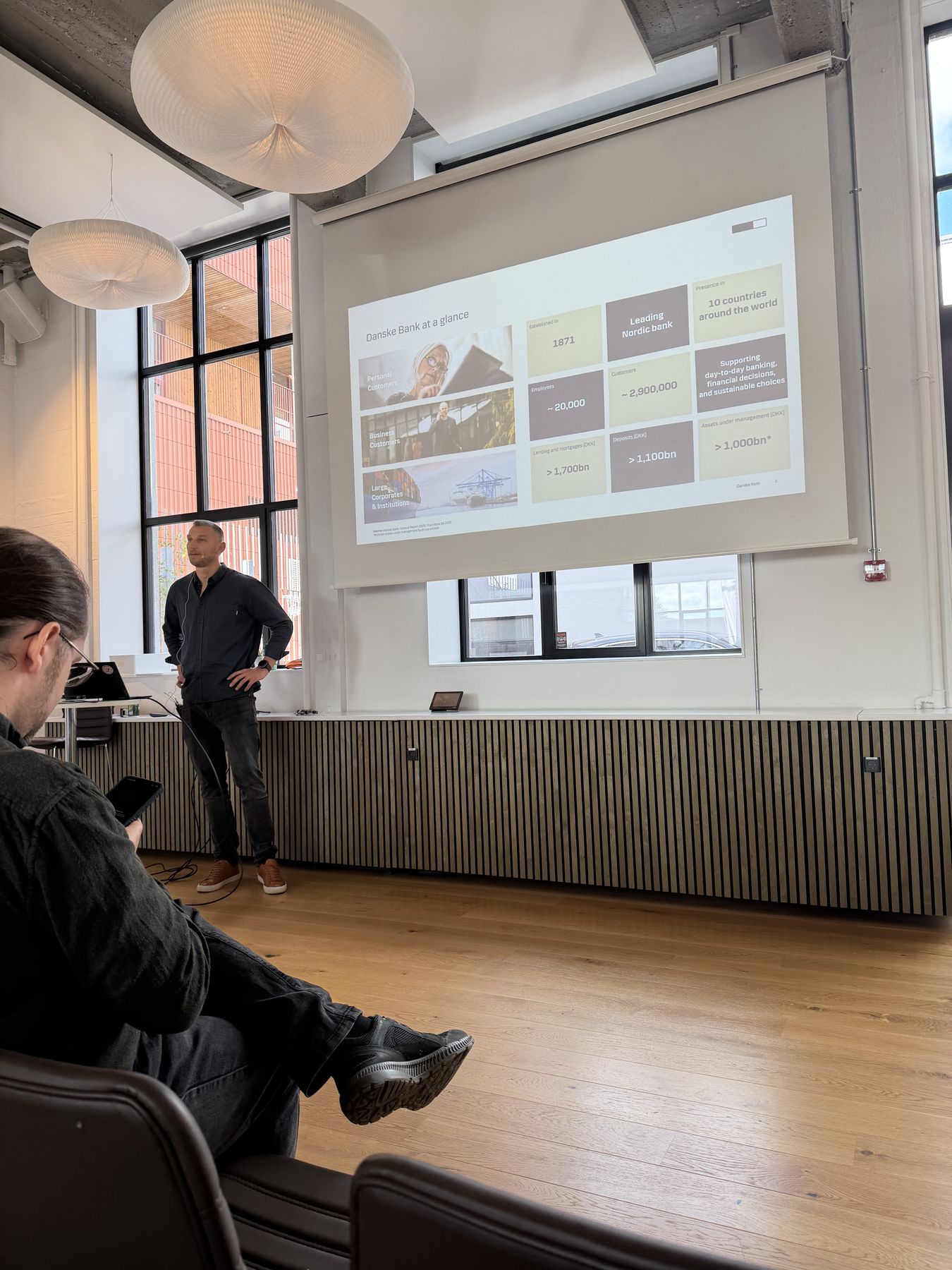
We are all living through the artificial-intelligence revolution.
That does not mean we are all understanding it the same way.
The conversations change depending on the market.
They change depending on the companies.
They change depending on technological maturity.
They change depending on the kind of problems each ecosystem is trying to solve.
Hearing how AI is discussed from Copenhagen, and contrasting that with the conversations we have every day in Mexico, helps a great deal in getting out of our own bubble.
Not because one place necessarily has “the right answer,” but because understanding different perspectives widens the questions you are able to ask.
And in technology, a better question is often worth far more than a fast answer.
Thanks to Thomas Martinsen and everyone behind Tech Passion Day for building rooms like this.
We are leaving with new ideas, new questions, and, above all, the same conviction:
AI is widening what we can build. Our job is to make sure we still understand what we are building.